
Most people wait for a stomachache. That’s the mistake. Gut health shows up in your skin, your sleep, your mood, and even how often you catch a cold long before it shows up in your stomach. By the time bloating or irregularity becomes noticeable, the underlying imbalance has usually been building for a while.
Here’s what the research actually says about which signs matter, and what to do about them.
The Obvious Signs: Your Digestive System Is Talking
Gas. Bloating. Constipation, diarrhea, heartburn. Everyone already associates these with gut trouble, and for good reason. They’re usually the first ones to show up. Pay attention to when the bloating happens, though: bloating that builds steadily throughout the day, rather than hitting right after one bad meal, usually means your gut is struggling to break down food efficiently on an ongoing basis (FAU Marcus Institute).
Irritable bowel syndrome overlaps heavily with these symptoms, and research consistently finds altered microbial diversity tracking with how severe it gets. The imbalance isn’t incidental to IBS, it’s part of the mechanism (PMC, Gut Microbiota Dysbiosis and IBS).
The Signs Most People Miss
This is where it gets more interesting.
Fatigue and Poor Sleep. A two-way network, running through the vagus nerve, hormones, immune signaling, connects your gut and brain constantly. Disrupt it, and the result isn’t just digestive discomfort; it’s flat energy and restless nights. One pilot clinical study on gut-targeted supplementation found measurable improvements in both mood and perceived sleep quality, tied directly to shifts along that axis (PMC, Nutraceutical Supplementation and Mood/Sleep). Separately, patients dealing with post-infectious fatigue saw real benefit from probiotic therapy; evidence that gut support can move the needle on energy levels tied to a compromised microbiome (PMC, Probiotic Therapy in Post-Infectious Fatigue).
Mood Changes and Brain Fog. Here’s an odd finding: a large systematic review and meta-analysis found gut dysbiosis functioning as a trans-diagnostic factor across severe mental illness and chronic fatigue. Two conditions that look unrelated on the surface, driven in part by the same underlying gut disruption (Molecular Psychiatry, Gut Dysbiosis in Severe Mental Illness and Chronic Fatigue).
Skin Issues That Won’t Clear Up. Of all the gut-body connections in recent microbiome research, the gut-skin axis is one of the best established. Atopic dermatitis and other inflammatory skin conditions link back to gut dysbiosis, and clinical trials using multi-strain probiotics have shown modest but real improvements in both severity and itch (PMC, From Gut Dysbiosis to Skin Inflammation in Atopic Dermatitis; PMC, Impact of Gut Microbiome on Skin Health). If a skin issue hasn’t responded to topical treatment, the source may not be on the skin at all.
Getting Sick More Often. A large share of your immune system lives in your gut, not your bloodstream. Short-chain fatty acids produced by gut bacteria regulate the immune response and help maintain the intestinal barrier, the wall that keeps pathogens out. Weaken that barrier, and susceptibility to infection climbs; researchers have found a clear correlation between microbiome composition and infectious disease risk (PMC, Role of Gut Microbiota in Infectious and Inflammatory Diseases). Catching every cold that goes around the office? Your gut is a reasonable place to look.
What This Means for You
None of these signs prove a gut problem on their own. Fatigue and brain fog have a dozen possible causes. So does bad skin. But stack several of them together, especially alongside digestive symptoms, and the gut is worth a closer look before anything else.
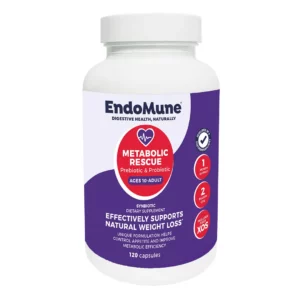
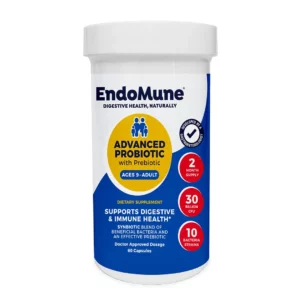
EndoMune’s multi-strain probiotic is designed to support a balanced gut microbiome as a complement to your overall health routine, not as a replacement for medical care. If you’re dealing with persistent digestive symptoms, unexplained fatigue, or skin issues that haven’t responded to treatment, talk with your doctor first, especially if you’re managing a chronic condition or taking prescription medication.
Practical Steps to Take Now
Track Your Symptoms for Two Weeks. Write down digestive symptoms alongside energy, mood, sleep quality, and skin condition. Patterns that aren’t obvious day-to-day often become clear once you can see two weeks side by side.
Prioritize Fiber-Rich, Diverse Foods. A wider variety of plant foods feeds a wider variety of gut bacteria. Aim for a variety of vegetables, legumes, and whole grains throughout the week rather than the same few staples.
Consider a Daily Multi-Strain Probiotic. Consistency matters more than timing. A daily multi-strain probiotic like EndoMune supports microbial diversity over time, which single-strain products generally can’t match.
Talk to Your Doctor Before Assuming It’s “Just Stress.” Persistent fatigue, mood changes, or skin issues deserve a real diagnostic conversation, especially if they’re new or worsening. Gut health is one piece of the picture, not the whole picture.
Sources
- FAU Marcus Institute — 12 Signs of Bad Gut Health: https://www.fau.edu/marcusinstitute/blog/signs-of-bad-gut-health/
- PMC — Gut Microbiota Dysbiosis and Its Role in the Development of Irritable Bowel Syndrome: https://www.ncbi.nlm.nih.gov/pmc/articles/PMC12116818/
- PMC — Nutraceutical Capsules LL1 and Silymarin Supplementation Act on Mood and Sleep Quality Perception by Microbiota–Gut–Brain Axis: A Pilot Clinical Study: https://www.ncbi.nlm.nih.gov/pmc/articles/PMC11435014/
- PMC — Positive Effects of Probiotic Therapy in Patients with Post-Infectious Fatigue: https://www.ncbi.nlm.nih.gov/pmc/articles/PMC10221065/
- Molecular Psychiatry (Nature) — Gut Dysbiosis in Severe Mental Illness and Chronic Fatigue: A Novel Trans-Diagnostic Construct? A Systematic Review and Meta-Analysis: https://www.nature.com/articles/s41380-021-01032-1
- PMC — From Gut Dysbiosis to Skin Inflammation in Atopic Dermatitis: Probiotics and the Gut–Skin Axis: https://www.ncbi.nlm.nih.gov/pmc/articles/PMC12785343/
- PMC — Impact of Gut Microbiome on Skin Health: Gut-Skin Axis Observed Through the Lenses of Therapeutics and Skin Diseases: https://pmc.ncbi.nlm.nih.gov/articles/PMC9311318/
- PMC — Role of Gut Microbiota in Infectious and Inflammatory Diseases: https://pmc.ncbi.nlm.nih.gov/articles/PMC10083300/