
Men’s Health Series: Gut–heart Axis
When most men think about heart risk, they think of cholesterol, blood pressure, and family history. Those matter. But researchers have identified another player most men never consider: the gut microbiome.
Scientists now call it the gut–heart axis — the two-way conversation between your digestive system and your cardiovascular health. What lives in your gut influences how your body processes fats, regulates blood pressure, and manages inflammation. And all three of those systems are central to heart disease risk.
Here’s what the research shows, and where a daily probiotic fits into the picture.
Why the Gut Affects the Heart
The connection works through three main pathways:
Cholesterol and Bile Acid Metabolism. Gut bacteria help process bile acids, which the body uses to digest fats and regulate cholesterol. Certain probiotic strains can bind cholesterol in the gut or convert it into forms more easily excreted — contributing to modest reductions in LDL, the “bad” cholesterol.
Blood Pressure and Vessel Tone. When gut microbes ferment dietary fiber, they produce short-chain fatty acids (SCFAs) like butyrate and propionate. These molecules help relax blood vessels, influence the nervous system, and affect how the kidneys handle salt — all of which nudge blood pressure in the right direction.
Systemic inflammation. A compromised gut barrier — often called “leaky gut” — allows bacterial fragments to enter the bloodstream and keep the immune system on low-grade alert. That chronic inflammation accelerates atherosclerosis, drives insulin resistance, and elevates CRP, all major factors in cardiovascular disease.
This is why researchers are interested in the microbiome as a target for heart health — not as a replacement for medication, but as a meaningful piece of the puzzle.
What Clinical Research Shows
Dozens of randomized controlled trials and several meta-analyses have examined how probiotic supplementation affects classic cardiovascular risk markers. The findings are consistent: modest but real improvements across multiple fronts.
Cholesterol and Triglycerides. Studies looking at adults with elevated cholesterol found that specific probiotic strains — particularly Lactobacillus plantarum, L. reuteri, L. acidophilus, and several Bifidobacterium species — produced meaningful reductions in LDL (typically 5–10 mg/dL) and modest improvements in triglycerides and HDL. Effects were most pronounced after 6–12 weeks of daily use.
Blood Pressure. A pooled analysis of randomized trials found that probiotic consumption was associated with small but consistent reductions in both systolic and diastolic blood pressure — particularly when baseline pressure was elevated, supplementation ran longer than 8 weeks, and multi-strain products were used rather than single strains. The magnitude is similar to what you might gain from a targeted lifestyle change, like reducing sodium intake or adding regular walks.
Inflammation and Metabolic Markers. Recent reviews highlight probiotic effects on C-reactive protein (CRP), fasting glucose, and insulin sensitivity — especially in people with metabolic syndrome or type 2 diabetes. These improvements matter because chronic low-grade inflammation and poor metabolic control are two of the most insidious drivers of long-term cardiovascular risk.
The consistent takeaway: modest, supportive benefits across multiple risk factors — not dramatic, drug-like effects, but real contributions when you’re doing the other things right.
Where EndoMune Fits In
Let’s be direct: probiotics don’t replace statins, blood pressure medications, or any therapy your doctor has prescribed.
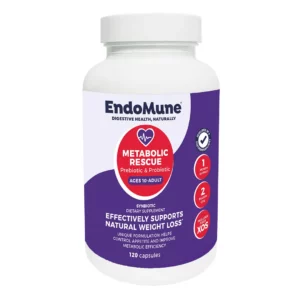
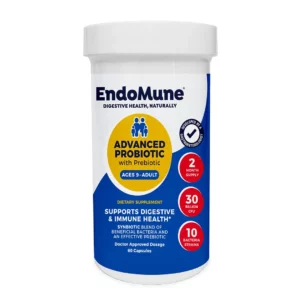
That said, the way EndoMune is formulated aligns well with what the research supports. EndoMune Advanced Probiotic includes 10 clinically selected strains — among them Lactobacillus and Bifidobacterium species, the same genera most frequently studied in lipid and blood pressure trials. High CFU counts and delayed-release capsules help ensure live bacteria survive the acidic journey through the stomach and reach the intestines, where they can actually do their job. A probiotic that doesn’t survive that trip can’t deliver any benefit.
EndoMune also supports gut barrier integrity, immune balance, and metabolic health — the same systems that intersect directly with the gut–heart axis.
Think of Endomune Advanced as one well-designed piece of a larger strategy, not a standalone fix.
Practical Steps for Men
Better heart health doesn’t require an overhaul. Start with these fundamentals:
Eat for Your Microbiome and Your Heart. Prioritize fiber from vegetables, fruits, beans, and whole grains. Add healthy fats — olive oil, nuts, fatty fish. Cut back on ultra-processed foods. This feeds beneficial gut bacteria while directly improving cholesterol and blood pressure markers.
Move Consistently. Even 20–30 minutes of brisk walking most days supports a healthier microbiome and measurably improves heart risk factors. It doesn’t have to be intense to count.
Take a quality multi-strain probiotic daily. Consistency matters more than timing. A product like EndoMune, taken every day, helps maintain the microbial diversity and gut balance that support healthier cholesterol, blood pressure, and inflammation over time.
Work with your doctor. Always talk with your physician before adding any supplement if you have heart disease, high blood pressure, diabetes, or take prescription medications. Probiotics work best as part of a coordinated plan — not as a workaround.
Sources
- Shimizu M, Hashiguchi M, Shiga T, Tamura H, Mochizuki M. Meta-Analysis: Effects of Probiotic Supplementation on Lipid Profiles in Normal to Mildly Hypercholesterolemic Individuals. PLoS One. 2015;10(10):e0139795. https://journals.plos.org/plosone/article?id=10.1371/journal.pone.0139795
- Cho Y, Kim M-S, et al. Effect of Probiotics on Blood Lipid Concentrations: A Meta-Analysis of Randomized Controlled Trials. https://pmc.ncbi.nlm.nih.gov/articles/PMC4985374/
- The Effects of Probiotics Consumption on Blood Pressure, Lipid Profile, Glycemic Indices, and Inflammatory Parameters in Overweight and Obese Adults: A Systematic Review and Meta-Analysis of Randomized Controlled Trials. Food Sci Nutr. 2025. https://pubmed.ncbi.nlm.nih.gov/40735396/
- Effects of Probiotics on Blood Lipids, Glucose and Pressure in Patients (meta-analysis, Frontiers in Cardiovascular Medicine). https://www.frontiersin.org/journals/cardiovascular-medicine/articles/10.3389/fcvm.2026.1707408/
- The Gut–Heart Axis: How the Gut Microbiota Impacts Cardiovascular Health. Gut Microbiota for Health, 2024. https://www.gutmicrobiotaforhealth.com/the-gut-heart-axis-how-the-gut-microbiota-impacts-cardiovascular-health/
- The Gut–Heart Axis: A Comprehensive Review of Microbiota’s Role in Cardiovascular Health. 2026 review. https://pmc.ncbi.nlm.nih.gov/articles/PMC12886191/
- ASM. Do Gut Microbes Shape Heart Health? American Society for Microbiology, 2026. https://asm.org/articles/2026/february/do-gut-microbes-shape-heart-health