
Introduction
When you think about healthy lungs, your gut probably isn’t the first thing that comes to mind. But a growing body of research shows the two are more connected than we knew. Scientists call it the gut-lung connection, and it turns out the trillions of bacteria living in your digestive system may play a role in how well you breathe.
This isn’t a wellness trend; it’s backed by a major research review and a brand-new 2025 clinical trial. Here’s what the science actually shows, and where it falls short.
How Does Your Gut Talk to Your Lungs?
Your gut and lungs share a similar mucosal lining, and immune cells travel constantly between the two through your bloodstream. When you eat fiber, gut bacteria ferment it into compounds called short-chain fatty acids (SCFAs). Those compounds travel through your blood to your lungs, where they help regulate lung health by keeping your immune system responding just enough to thwart inflammation. Your gut bacteria also communicate with your lungs through the vagus nerve, which is a long nerve that runs from your brainstem through your chest and abdomen, carrying and coordinating signals between your organs.
When your gut bacteria fall out of balance, a condition called dysbiosis, they produce fewer of the compounds your lungs rely on to keep inflammation in check. That inflammation isn’t contained to your gut; it spreads to your lungs too, which is why researchers are now studying gut bacteria as a genuine piece of the puzzle for conditions like asthma, COPD, and even how fast someone recovers from a common cold.
What the Research Shows
Fewer Colds, Faster Recovery. A Cochrane review, which is one of the most trusted forms of medical research because it pools results from many separate trials, examined 12 studies involving nearly 3,700 people. Participants who took probiotics were less likely to catch a cold or other upper respiratory infection than those who took a placebo, and when they did get sick, their symptoms cleared up about two days faster.
Shorter Fevers in Kids. A 2025 randomized clinical trial published in JAMA Network Open, one of the most respected medical journals, followed children with respiratory infections. Kids who took a specific probiotic ran fevers about two days shorter than kids who took a placebo.
A Link to Chronic Lung Conditions. Researchers analyzed health data from thousands of U.S. adults and found that people who regularly ate yogurt, or took probiotics and prebiotics, had a lower rate of chronic obstructive pulmonary disease, or COPD. That doesn’t prove probiotics prevent COPD, but it adds one more data point to a growing pattern. Separate research has found something similar with asthma in young children: an imbalanced gut early in life has been linked to a higher risk of developing breathing problems later on.
What the Research Doesn’t Show
Here’s an Honest Assessment: this field is still young, and most studies aimed specifically at lung disease are small. Scientists agree we need larger, longer trials before anyone can say for certain that probiotics prevent or treat a lung condition. Nevertheless, what the current evidence does show is a consistent pattern across multiple independent studies, that gut health and lung health are connected, and taking care of one appears to help the other.
If you manage asthma, COPD, or another lung condition, or take prescription medication for breathing, talk to your doctor before adding any new supplement like a probiotic. Probiotics work best alongside your medical care, not in place of it.
Simple Steps to Support Both Your Gut and Your Lungs
Eat More Fiber-Rich Foods. Vegetables, fruits, beans, and whole grains feed the bacteria that produce the inflammation-fighting compounds your lungs rely on.
Consider a Daily Multi-Strain Probiotic. Look for a formula with several different strains of good bacteria. Consistency matters more than timing, so pick a routine you can actually stick with.
Watch for Recurring Respiratory Symptoms. If you catch colds often, have frequent congestion, or if your breathing feels off, discuss it with your doctor and consider your gut health as one piece of that conversation.
Work with Your Doctor. Speak to your physician before starting a new supplement, especially if you manage a lung condition or take other medications.
Where EndoMune Fits In
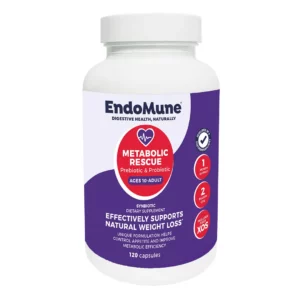
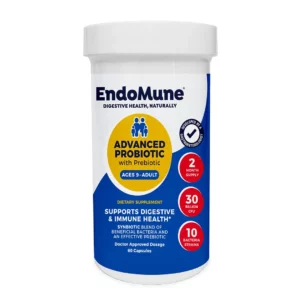
EndoMune’s multi-strain probiotic is formulated by a board-certified gastroenterologist to support a healthy, balanced gut every day. It’s designed to work alongside good habits and your doctor’s care, not replace either one, which matters most if you’re managing a chronic condition like asthma or COPD.
The Bottom Line
The connection between gut health and lung health holds up under real scrutiny – it’s not just a catchy headline. Probiotics won’t cure a lung condition or replace your doctor’s care, but the evidence shows a healthy gut may genuinely help your body fight off respiratory infections and support your lungs over the long run. It’s a simple, low-risk habit that fits alongside everything else you’re already doing to breathe easier.
Sources
- Probiotics for preventing acute upper respiratory tract infections (Cochrane review): https://pmc.ncbi.nlm.nih.gov/articles/PMC9400717/
- The Beneficial Role of Probiotic Lactobacillus in Respiratory Diseases: https://pmc.ncbi.nlm.nih.gov/articles/PMC9194447/
- The Intriguing Connection Between the Gut and Lung Microbiomes: https://www.mdpi.com/2076-0817/13/11/1005
- The Potential Protective Effects of Probiotics, Prebiotics, or Yogurt on COPD (NHANES 2007-2012 study): https://pmc.ncbi.nlm.nih.gov/articles/PMC11521661/
- Probiotics and Fever Duration in Children With Upper Respiratory Tract Infections, Randomized Clinical Trial: https://pubmed.ncbi.nlm.nih.gov/40085083/
- Trial Links Probiotics to Fever Reduction in Kids With Respiratory Infections (CIDRAP, University of Minnesota): https://www.cidrap.umn.edu/antimicrobial-stewardship/trial-links-probiotics-fever-reduction-kids-respiratory-infections