If you take an antidepressant and still feel like something’s missing, new research points to an unexpected ally: the bacteria living in your gut.
A study published in June 2026 in the Journal of the American Geriatrics Society followed 58 adults over 60 with moderate depression. Every participant kept taking their regular antidepressant. Half also took a daily probiotic for 12 weeks; the other half took a placebo. Researchers tracked everyone for another 12 weeks after that.
Both groups improved, which makes sense since everyone stayed on their medication. But the probiotic group pulled ahead of the other group. They showed a larger reduction in both depression and anxiety scores than the placebo group did. The researchers also tracked the participants’ gut bacteria and a set of biological markers tied to brain health, and they found measurable shifts there too.
Why a Probiotic Would Affect the Brain at All
This isn’t as strange as it sounds. Your gut and your brain stay in constant contact through nerves, hormones, and immune signals, a relationship scientists call the gut-brain axis. Gut bacteria produce compounds that influence mood and stress response, and they help regulate inflammation, which research increasingly links to depression.
A 2024 review in the journal Medicina describes how certain probiotic strains, sometimes called psychobiotics, appear to influence this pathway. Scientists still haven’t nailed down the exact mechanisms, but the general picture holds up across a growing number of studies: what happens in your gut doesn’t stay in your gut.
The Catch: This Works as a Team Effort
Here’s a key takeaway. A 2021 meta-analysis in the Journal of Clinical Medicine reviewed seven randomized trials and roughly 400 people with clinical depression. It found that probiotics helped when people took them alongside their antidepressant. Taken alone, probiotics showed no real benefit.
The new 2026 study confirms that pattern. No one in the trial stopped taking their medication. The probiotic didn’t replace any medication the participants were prescribed; rather, the probiotic supplement worked in tandem with the participants’ medication and appeared to amplify the results.
What This Means If You’re Considering Adding a Probiotic
Don’t change your treatment plan or stop taking your antidepressant. Depression and anxiety deserve real intervention with a medical professional. So, talk with your doctor or psychiatrist before adding any supplement, especially if you take prescription medication.
Once Your Doctor Gives You the Go-Ahead:
Keep Your Current Treatment: Don’t stop or reduce an antidepressant to “test” whether a probiotic works instead. Every study showing a benefit used probiotics as an addition, not a replacement.
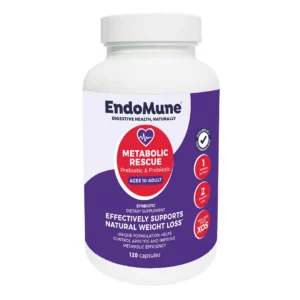
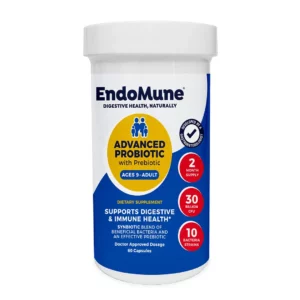
Choose a Multi-Strain Formula: The research on the gut-brain typically uses a multi-strain probiotic. So, choose a broad, multi-strain probiotic like EndoMune, which gives your gut a better chance to work than a single-strain probiotic supplement.
Give It Time: The study that found results ran for 12 weeks before measuring perceptual change. Gut bacteria shift gradually. So, don’t expect a noticeable difference immediately.
The Bottom Line
The gut-brain connection has moved well past theory. This latest trial adds real, measured evidence that a daily probiotic can help anyone manage their depression and anxiety, particularly older people. The research is still new, and a probiotic will never replace antidepressants, but as a complement to them it’s one of the more promising threads in gut health research right now.
Sources
Sinha, P., Chatterjee, P., et al. “Efficacy of Adjunct PRObiotics as Compared to the Standard Care in Moderate Unipolar Depression Among Geriatric Patients” (PRODG trial). Journal of the American Geriatrics Society, 2026. https://doi.org/10.1111/jgs.70530
“A Narrative Review of Psychobiotics: Probiotics That Influence the Gut-Brain Axis.” Medicina (Kaunas), 60(4), 601, 2024. https://pmc.ncbi.nlm.nih.gov/articles/PMC11051712
Nikolova, V.L., Cleare, A.J., Young, A.H., Stone, J.M. “Updated Review and Meta-Analysis of Probiotics for the Treatment of Clinical Depression: Adjunctive vs. Stand-Alone Treatment.” Journal of Clinical Medicine, 10(4), 647, 2021. https://pmc.ncbi.nlm.nih.gov/articles/PMC7915600