
Have you ever had a knot in your stomach before a big presentation? Or felt nauseous during a tense conversation? Maybe anxiety hits and suddenly your gut is not cooperating at all.
That’s not just nerves. That’s your biology working exactly as designed. Your brain and your gut are in constant conversation, and when stress enters the picture, both feel it.
Here’s what’s actually happening inside your body, and what you can do about it.
Your Gut and Brain Are Always Talking
Your brain and gut stay connected through a communication network called the gut-brain axis. This system includes the vagus nerve, immune signals, hormones, and what scientists call the “second brain”, a web of more than 100 million nerve cells woven right into the lining of your digestive tract.
When stress hits, your brain releases a hormone called corticotropin-releasing factor (CRF), which is the starting gun for your body’s fight-or-flight response. What most people don’t realize is that this signal travels straight to the gut. CRF disturbs the balance of gut bacteria, damages the intestinal lining, and triggers cells in your gut to release excess serotonin, the chemical that controls how fast food moves through your digestive system, and how much discomfort you feel as it happens.
What Stress Actually Does to Your Gut
The effects of chronic stress on your digestive system are real and measurable. Here are six ways stress changes what’s happening in your gut:
- Altered Gut Motility: Stress speeds up or slows down how quickly food moves through your intestines, which can cause diarrhea, constipation, or both.
- Increased Gut Sensitivity: Your gut becomes more reactive to normal sensations, making every day digestive activity feel painful or uncomfortable.
- Changes in Digestive Secretions: Stress affects how much stomach acid and digestive enzymes your body produces.
- Increased Intestinal Permeability: Stress weakens the connections between intestinal cells, a condition often called “leaky gut.”
- Slowed Gut Healing: Your gut’s ability to repair and regenerate its lining slows down under chronic stress.
- Microbiome Disruption: Stress reduces the diversity of your gut bacteria and allows harmful strains to take over.
Leaky Gut: When the Barrier Breaks Down
Your intestinal lining is only one cell thick. It’s held together by proteins that act like gatekeepers, letting nutrients through while keeping bacteria, toxins, and undigested food particles out.
Chronic stress weakens those gatekeepers. When they fail, bacteria and other compounds leak into the bloodstream and trigger an immune response. That response drives inflammation throughout your body, not just in your gut. Research has linked leaky gut to metabolic diseases, cardiovascular issues, neurodegeneration, and autoimmune conditions. What starts as a stressed gut ripples outward and affects your whole body.
Stress, Your Microbiome, and the Feedback Loop
Your gut microbiome, the trillions of bacteria and other microorganisms living in your intestines, helps regulate inflammation, immunity, and even your mood. Stress throws this community into disarray.
When stress triggers an imbalance in your gut bacteria (called dysbiosis), beneficial bacteria decline and harmful strains multiply. That shift drives inflammation, and here’s the frustrating part: the inflammation itself creates more stress signals, which worsens the imbalance.
It’s a cycle that feeds itself.
Microbiome disruption is also a central feature of irritable bowel syndrome (IBS), which affects up to 15% of people worldwide and is one of the most common stress-related gut disorders.
Stress-Related Gut Disorders: What to Watch For
Chronic stress is a known trigger, or a factor that makes things worse, for several digestive conditions:
- Irritable Bowel Syndrome (IBS): Cramping, bloating, diarrhea, constipation, or a mix of all of the below.
- Inflammatory Bowel Disease (IBD): Stress doesn’t cause Crohn’s or ulcerative colitis, but it reliably triggers and worsens flares.
- GERD and Peptic Ulcers: Stress increases stomach acid production and weakens the gut’s protective lining.
- Food Sensitivities: A leaky gut makes your immune system more reactive to foods that wouldn’t normally cause problems.
How Probiotics Can Help
Here’s the encouraging part. Your microbiome isn’t just a passive victim of stress; it’s also something you can actively support and strengthen.
Probiotics, live beneficial bacteria, work along several pathways to push back against stress-related gut damage:
- Reinforcing the Intestinal Barrier: Beneficial bacteria help maintain and repair the proteins that keep your gut lining sealed.
- Reducing Inflammation: Probiotics produce compounds that fuel intestinal cells and dial down inflammation throughout the gut.
- Calming the Stress Response: A balanced microbiome can influence how much stress hormone your body produces, helping you respond to stress without the same downstream damage.
- Supporting Serotonin Production: About 95% of your body’s serotonin comes from the gut. Probiotics support serotonin availability, which affects both mood and digestion.
Research confirms that a consistent probiotic routine can strengthen the intestinal barrier, reduce gut inflammation, and support the hormonal balance your gut needs to stay resilient under stress.
Practical Steps to Protect Your Gut When Life Gets Stressful
You can’t always control stress. But you can build a gut that handles it better.
- Take a Quality Multi-Strain Probiotic: Look for formulas with Lactobacillus and Bifidobacterium strains, the bacteria most studied for gut barrier support and inflammation control.
- Eat More Fiber: Prebiotic fibers found in garlic, onions, bananas, oats, and legumes feed beneficial bacteria and help maintain a diverse microbiome.
- Prioritize Sleep: Poor sleep and stress amplify each other, and sleep deprivation independently disrupts gut bacteria.
- Manage Stress Actively: Regular exercise, mindfulness, and social connection all reduce your body’s stress hormone activity and protect your gut downstream.
- Limit Alcohol and Ultra-Processed Foods: Both drive dysbiosis and leaky gut on their own, compounding the damage stress already causes.
Where EndoMune Fits In
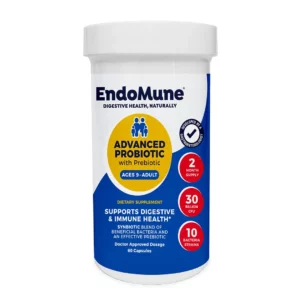
EndoMune Advanced Probiotic is a multi-strain formula built around Lactobacillus and Bifidobacterium, the strains the research keeps pointing back to for gut barrier support, microbiome diversity, and inflammation control.
When stress is unavoidable, and for most of us some level of stress will always be lurking, a consistent probiotic routine gives your gut the backup it needs. Think of it as maintaining a strong defense before the stress hits, not just trying to recover after.
Shop EndoMune Advanced Probiotic and start supporting your gut today.
As always, if you are dealing with significant digestive symptoms, talk to your healthcare provider. Stress-related gut issues are treatable, and with the right support, you can make a real difference in how your body responds.
Sources
Based on articles retrieved from PubMed.
- Zhang H, et al. (2023). “Understanding the Connection between Gut Homeostasis and Psychological Stress.” The Journal of Nutrition, 153(4):924–939. https://doi.org/10.1016/j.tjnut.2023.01.026
- Konturek PC, Brzozowski T, Konturek SJ. (2011). “Stress and the gut: pathophysiology, clinical consequences, diagnostic approach and treatment options.” Journal of Physiology and Pharmacology, 62(6):591–599. https://pubmed.ncbi.nlm.nih.gov/22314561/
- Di Vincenzo F, et al. (2023). “Gut microbiota, intestinal permeability, and systemic inflammation: a narrative review.” Internal and Emergency Medicine, 19(2):275–293. https://doi.org/10.1007/s11739-023-03374-w
- Mostafavi Abdolmaleky H, Zhou JR. (2024). “Gut Microbiota Dysbiosis, Oxidative Stress, Inflammation, and Epigenetic Alterations in Metabolic Diseases.” Antioxidants (Basel), 13(8):985. https://doi.org/10.3390/antiox13080985
- Kennedy PJ, et al. (2014). “Irritable bowel syndrome: a microbiome-gut-brain axis disorder?” World Journal of Gastroenterology, 20(39):14105–14125. https://doi.org/10.3748/wjg.v20.i39.14105