
Choosing the best probiotics for infants and children is one of the most important decisions a parent can make for their child’s long-term health, and the science backing early-life probiotic supplementation has never been more compelling. A landmark clinical finding shows that an 87% treatment success rate was achieved by day 30 for infants using a synbiotic blend for colic, compared to just 46% in the placebo group, demonstrating that getting the right strains and the right support system into tiny guts can make a measurable, meaningful difference from the earliest days of life.
Key Takeaways
Question | Answer |
| What is the best probiotic supplement for newborns? | EndoMune Baby Probiotic Powder is doctor-developed, delivers 10 billion CFUs per serving, and is gentle enough for infants from birth through age 3, including babies born by C-section. |
| How many CFUs do infants and Children need? | Research suggests a minimum of 8–10 billion living probiotic bacteria per day is necessary to realize a measurable health benefit for young children. |
| Are probiotics safe for infants? | Yes, when formulated specifically for infants by qualified healthcare professionals. Look for non-GMO, gluten-free, and sugar-free options with clinically supported strains. |
| What is a synbiotic? | A synbiotic combines probiotics with a prebiotic (like Frutooligosaccharides, or FOS) to feed the beneficial bacteria and maximize their effectiveness in the gut. |
| Which probiotic is best for toddler digestive health? | EndoMune Junior Advanced Chewable Probiotic delivers 10 billion CFUs in a sugar-free, kid-friendly chewable tablet designed for children ages 3 and up. |
| Does my child need a probiotic supplement? | Many children benefit from daily probiotic support, especially after antibiotic use, during C-section recovery, or when experiencing colic, constipation, or digestive discomfort. |
Why Probiotics for Infants and Children Matter in 2026
A child’s gut microbiome begins developing at birth, and the first three years of life represent the most critical window for establishing a healthy bacterial balance. Disruptions during this period — whether from C-section delivery, antibiotic exposure, formula feeding, or infantile colic — can have lasting effects on digestive function and immune resilience.
We developed our infant and toddler probiotic formulas specifically to address these early-life vulnerabilities. Since launching EndoMune Junior in 2009, we have remained committed to providing all-natural gut support that is safe, effective, and accessible for the smallest members of your family.
The gut is not simply a digestive organ. It is the foundation of the immune system. Research consistently confirms that a thriving gut microbiome supports not only regularity and digestive comfort, but also immune system resilience and overall wellness from the very first days of life.
Five key probiotic benefits for infants and Children are highlighted, from gut health to immune support. A concise visual guide to help parents choose probiotics for little ones.

What to Look for in the Best Probiotics for Infants and Children
Not all probiotic supplements are created equal, and the differences matter enormously when you are choosing something for a newborn or toddler. Here is what parents should prioritize when evaluating options in 2026.
- CFU Count: A minimum of 10 billion CFUs per serving is the clinically supported threshold for meaningful benefit in young children.
- Multi-Strain Formulation: Multiple bacterial strains offer broader coverage than single-strain products, more closely mimicking the natural diversity of a healthy gut microbiome.
- Synbiotic Design: The best infant probiotics include a prebiotic component, such as Frutooligosaccharides (FOS), to feed and sustain the live bacteria once they reach the gut.
- Age-Appropriate Format: Powder formulas mix easily into liquid or formula for newborns and infants, while chewable tablets are better suited for Children ages 3 and up.
- Clean Ingredient Profile: Look for non-GMO, gluten-free, dairy-free, sugar-free, and vegan-friendly options to minimize unnecessary additives.
- Doctor-Developed Credentials: Formulas developed and tested by practicing clinicians — not just marketed with vague “doctor-recommended” language — offer a higher standard of evidence.
- Shelf Stability: Products with guaranteed potency through the end of their shelf life ensure the CFU count on the label is the CFU count your child actually receives.
EndoMune Baby Probiotic Powder: Best Probiotic for Newborns and Infants
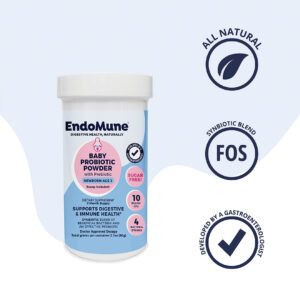
For parents of newborns, infants delivered by Caesarean section, or babies experiencing infantile colic, the EndoMune Baby Probiotic Powder is our best recommendation. It is a gentle, all-natural gut support formula that delivers 10 billion CFUs per serving, specifically calibrated for the developing digestive systems of children from birth through age 3.
Price: $29.95 per bottle. Also available as a Baby Powder Twin Pack for $53.91, saving parents 10% on ongoing supply.
Key Features of EndoMune Baby Probiotic Powder
- 10 Billion CFUs per serving, meeting the minimum clinically supported dosage for infant gut health
- Prebiotic FOS (Frutooligosaccharides) included to nourish and sustain the live bacteria in the gut
- Non-dairy, non-GMO, kosher, gluten-free, and vegan, making it suitable for a wide range of dietary needs
- Sugar-free formulation with no unnecessary additives
- Easy powder format that mixes into liquid, formula, or breast milk
- Recommended for infants born by C-section and those experiencing colic
How To Use It
For newborns through age 3, mix one scoop of the powder into liquid, formula, or breast milk. When a child is on antibiotics, administer the probiotic supplement at least two hours apart to protect the live bacteria from the antibiotic’s effects.
EndoMune Junior Advanced Chewable: Best Probiotic for Children and Growing Kids
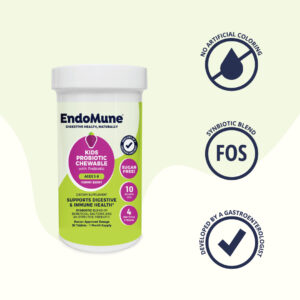
Once children graduate past age 3, a chewable probiotic format becomes both more practical and more enjoyable. The EndoMune Junior Advanced Chewable Probiotic delivers 10 billion CFUs per tablet across four targeted bacterial strains, in a sugar-free, kid-friendly format that children actually want to take.
Price: $32.95 per bottle. Parents who want to stock up can choose the Junior Chewable Twin Pack for $59.31, offering savings on two bottles of this daily health supplement.
Key Features of EndoMune Junior Advanced Chewable
- 10 Billion CFUs per chewable tablet, meeting the minimum effective dosage for children’s digestive health
- Four targeted probiotic strains selected for their relevance to children’s gut microbiome needs
- Prebiotic FOS included to sustain live bacteria and enhance gut colonization
- Sugar-free with no artificial sweeteners that could disrupt the gut environment
- Recommended by healthcare professionals for children experiencing digestive discomfort, immune challenges, or antibiotic recovery
- Shelf-stable for extended periods, no refrigeration required
Did You Know? 54% of parents globally identify “brain health” as a top priority for their children’s supplements, trailing closely behind immunity and gut health. — Nutraceuticals World
Best Probiotic Supplement Options for Every Age: At-a-Glance Comparison
Product | Age Range | Format | CFUs | Price |
| EndoMune Baby Probiotic Powder | Newborn to Age 3 | Powder (mix into liquid) | 10 billion | $29.95 |
| EndoMune Baby Powder Twin Pack | Newborn to Age 3 | Powder (2 bottles) | 10 billion | $53.91 |
| EndoMune Junior Advanced Chewable | Age 3 and up | Chewable Tablet | 10 billion | $32.95 |
| EndoMune Junior Chewable Twin Pack | Age 3 and up | Chewable Tablet (2 bottles) | 10 billion | $59.31 |
| EndoMune Advanced Probiotic (Adult) | Adults | Capsule | 30 billion | $42.95 |
How Gut Health in Early Life Sets the Foundation for Lifelong Wellbeing
The science of early-life gut health has expanded significantly in 2026. We now understand that the trillions of microorganisms colonizing an infant’s intestinal tract are not passive bystanders. They actively communicate with the immune system, influence nutrient absorption, and even interact with neurological development pathways.
For C-section-delivered babies, this process faces an immediate challenge. Infants born vaginally are colonized with beneficial maternal bacteria during delivery, but C-section babies miss this initial exposure, often resulting in a less diverse and less robust starting microbiome. A targeted probiotic supplement can help fill this gap during the critical early weeks.
Babies with infantile colic also benefit significantly from probiotic support. Our Baby Probiotic Powder is specifically recommended for colicky infants, providing gentle, all-natural gut support during one of the most stressful periods for both baby and family.
“All-natural probiotic supplementation can pick up slack where the body is lacking.” Our philosophy has always been to support the body’s natural processes, not override them, particularly in the delicate early years of development.
The Science Behind Synbiotic Probiotic Formulas for Babies and Children
 The term “synbiotic” refers to a combination of probiotics and prebiotics working together as a system. Probiotics are the live beneficial bacteria; prebiotics are the non-digestible fibers that feed those bacteria and help them thrive in the gut environment.
Our EndoMune infant and toddler formulas use Frutooligosaccharides (FOS) as the prebiotic component. FOS occurs naturally in certain plants and acts as a fuel source specifically for beneficial bacteria, helping the live strains survive the journey through the digestive tract and establish themselves in the intestinal lining.
This is a meaningful distinction from products that supply probiotics without prebiotic support. Delivering live bacteria without their preferred food source is like planting seeds in depleted soil. The synbiotic approach gives those beneficial bacteria the best possible environment to grow and provide health benefits.
When Are Probiotics for Infants and Children Most Important?
While daily probiotic supplementation supports consistent gut health, there are specific situations where starting or maintaining a probiotic regimen becomes especially important for young children.
- After antibiotic treatment: Antibiotics eliminate both harmful and beneficial bacteria. A targeted probiotic supplement helps restore the gut microbiome faster and reduces the risk of secondary digestive issues. Always space the probiotic dose at least two hours from the antibiotic dose.
- C-section delivery: Babies born via Caesarean section do not receive the same initial bacterial colonization as vaginally-delivered infants. Starting a probiotic supplement in the early days of life helps compensate for this difference.
- Infantile colic: Colic is strongly associated with gut microbiome imbalances. Synbiotic support can ease digestive discomfort and reduce crying episodes.
- Constipation or irregular digestion: Children who struggle with digestive regularity often benefit from consistent probiotic support that helps maintain intestinal motility.
- Immune system support during cold and flu season: A balanced gut microbiome is directly linked to stronger immune defenses. Consistent probiotic use throughout the year — not just when illness strikes — provides the most robust protection.
- Transitioning from breast milk to formula or solid foods: Dietary transitions can temporarily disrupt the gut microbiome. Probiotic supplementation provides a stabilizing effect during these changes.
Probiotics for Preterm Babies and Special Circumstances
Premature infants face additional gut health challenges compared to full-term babies. Their microbiomes are typically less developed at birth, and the NICU environment — including extended antibiotic use and delayed breastfeeding — can further disrupt healthy bacterial colonization.
The EndoMune Baby Probiotic Powder’s gentle formulation, combined with its synbiotic design and clean ingredient profile, makes it a strong candidate for healthcare professionals to consider in these contexts. We encourage parents of preterm infants to discuss probiotic supplementation with their neonatologist or pediatric gastroenterologist before beginning any regimen.
Did You Know? 79% of global infant nutrition launches (formula and milk) between mid-2023 and 2024 featured probiotic ingredients, indicating that most parents are already providing probiotics to their babies via standard formula. — Nutrition Insight
Frequently Asked Questions About the Best Probiotics for Infants and Children
What is the best probiotic for a newborn baby in 2026?
The best probiotic for a newborn is one specifically formulated for infants, delivering 10 billion CFUs in a gentle powder format that mixes easily into liquid or formula. EndoMune Baby Probiotic Powder meets all of these criteria, is developed by a board-certified gastroenterologist, and is particularly recommended for C-section-delivered babies and those with colic.
Can I give my toddler a probiotic supplement every day?
Yes, daily probiotic supplementation is generally safe and beneficial for Children when using an age-appropriate product with a clinically supported dose. EndoMune Junior Advanced Chewable is designed for daily use in children ages 3 and up, delivering 10 billion CFUs per tablet with prebiotic FOS to sustain gut health continuously.
Are probiotics for infants and Children safe after antibiotics?
Probiotics are widely recommended by healthcare professionals following antibiotic courses to help restore healthy gut bacteria. The key is to space the probiotic dose at least two hours apart from the antibiotic dose so the beneficial bacteria are not killed before reaching the gut. Both our baby powder and chewable formulas are appropriate for post-antibiotic recovery.
How do I know if my baby needs a probiotic supplement?
Signs that a baby or toddler may benefit from a probiotic supplement include colic, constipation, diarrhea, frequent illness, or known disruptions to the microbiome such as C-section delivery or antibiotic use. We recommend consulting your pediatrician or a gastroenterologist for personalized guidance, particularly for infants under six months.
What is the difference between a probiotic and a synbiotic for infants?
A probiotic delivers live beneficial bacteria, while a synbiotic also includes a prebiotic component (such as FOS) that feeds those bacteria and helps them thrive once they reach the gut. Synbiotic formulas, like EndoMune’s infant and toddler products, are considered the more comprehensive approach because they support both the delivery and survival of beneficial bacteria.
Are EndoMune infant probiotics gluten-free and non-GMO?
Yes, EndoMune Baby Probiotic Powder is non-dairy, non-GMO, kosher, gluten-free, vegan, and sugar-free. Our commitment to clean formulations means parents do not need to worry about introducing unnecessary additives alongside the probiotic supplement.
Is it worth buying the twin pack for infant or toddler probiotics?
For parents committed to consistent daily probiotic support, the twin pack options offer meaningful savings: the Baby Powder Twin Pack is $53.91 (versus $59.90 for two individual bottles) and the Junior Chewable Twin Pack is $59.31. Since gut health benefits compound over consistent, long-term use, the twin pack is a practical choice for families making probiotics a daily health habit.
Key Takeaways
Choosing the best probiotics for infants and Children is not a decision to make based on flashy packaging or vague health claims. It requires looking at formulation credentials, CFU counts, synbiotic design, age-appropriate delivery formats, and ingredient transparency. On all of these measures, EndoMune’s infant and toddler probiotic supplement range — developed by a practicing gastroenterologist and manufactured to exacting standards in the USA — offers parents a clinically grounded, trustworthy option.
From newborns navigating the earliest days of gut colonization to Children building the immune and digestive resilience that will carry them through childhood, the right probiotic supplement can make a measurable difference in health outcomes. Our mission since 2007 has been simple: to make natural digestive and immune health support safe, effective, and accessible for all — and that commitment guides every formulation we produce for the smallest, most important patients of all.
Reference: Synbiotic in the management of infantile colic: a randomised controlled trial – PubMed
https://pubmed.ncbi.nlm.nih.gov/24962875/