
Quick Summary: Clinical research demonstrates that certain probiotic strains, particularly Bifidobacterium lactis and Lactobacillus rhamnosus, may help reduce blood pressure and improve cholesterol levels. These beneficial bacteria create compounds that fight inflammation and support blood vessel health, working most effectively alongside healthy lifestyle choices.
Could Your Gut Hold the Key to Better Heart Health?
The connection between gut bacteria and heart health might sound unusual, but recent scientific discoveries reveal a fascinating relationship for how probiotics support heart health. Those trillions of microorganisms in your digestive tract don’t just help you digest food but actively communicate with your cardiovascular system.
When researchers first proposed this gut-heart connection, many were skeptical. Today, mounting evidence shows that specific probiotic strains produce metabolites that directly influence blood pressure, cholesterol levels, and blood vessel function.
Three Ways Probiotics Support Heart Health
Blood Pressure Regulation
Nearly 45% of American adults struggle with high blood pressure, yet research suggests certain probiotics might offer natural support. Studies focusing on Bifidobacterium lactis and Lactobacillus rhamnosus show these strains can influence both systolic and diastolic readings.
The mechanism involves several pathways:
- Probiotic Metabolites Help Blood Vessels Stay Flexible
- Anti-Inflammatory Compounds Reduce Arterial Stress
- Enhanced Nitric Oxide Production Improves Circulation
- Balanced Gut Bacteria Send Beneficial Signals Throughout the Body
Cholesterol Management
While probiotics won’t replace cholesterol medications for high-risk patients, research indicates they can provide meaningful improvements over time. Multiple clinical trials document reductions in both total cholesterol and LDL levels among regular probiotic users.
The cholesterol-lowering effects appear linked to how certain bacteria process dietary fats and bile acids, essentially helping your body manage cholesterol more efficiently.
Vascular Protection
Probiotics also produce short-chain fatty acids and other bioactive compounds that protect blood vessels. These substances:
- Combat Chronic Inflammation That Damages Arterial Walls
- Reduce TMAO Production (A Heart Disease Risk Factor)
- Strengthen Intestinal Barriers, Preventing Toxins from Entering Circulation
- Support Immune Responses That Maintain Cardiovascular Health
What Recent Studies Tell Us
Current research paints an encouraging picture, though scientists emphasize we’re still learning about optimal dosing and duration required to achieve meaningful results with probiotic supplementation. Nevertheless, the data is encouraging.
Study Findings on Blood Pressure: Participants with hypertension who used probiotics consistently for two months or more showed statistically significant improvements in both blood pressure measurements – diastolic and systolic readings.
Cholesterol Research Results: Several 2025 trials confirmed that probiotic supplementation improves cholesterol, particularly when combined with dietary changes.
Duration and Consistency Matter: The best benefits emerged after at least eight weeks of regular use, suggesting these effects accumulate gradually.
Strain Specificity Counts: Not all probiotics deliver the same cardiovascular benefits—research consistently highlights Bifidobacterium lactis and Lactobacillus rhamnosus as particularly promising.
Understanding the Gut-Heart Communication Network
Scientists call this relationship the “gut-heart axis,” and it operates through sophisticated biochemical signaling.
When beneficial bacteria ferment dietary fiber, they generate compounds like butyrate and propionate. These molecules travel through your bloodstream, reaching your heart and blood vessels where they:
- Reduce Inflammation That Threatens Arterial Health
- Enhance Blood Vessel Elasticity for Improved Circulation
- Help Regulate Blood Pressure Naturally
- Minimize Production of Harmful Metabolites
- Reinforce Your Intestinal Barrier Against Toxins
Imagine that your gut bacteria are microscopic chemists, constantly producing compounds that help your cardiovascular system.
Practical Steps for Heart-Healthy Gut Support
You don’t need dramatic lifestyle changes to benefit from this gut-heart connection. Consider these friendly strategies:
Incorporate Probiotic Foods Daily
Start your morning with plain Greek yogurt topped with berries. The live cultures provide beneficial bacteria while the fiber feeds them. Alternatively, try kefir in smoothies—it contains more diverse probiotic strains than most yogurts.
For lunch or dinner, experiment with fermented vegetables. Sauerkraut, kimchi, and pickled vegetables add probiotics plus interesting flavors to meals. Those who enjoy beverages might appreciate kombucha as an afternoon refresher.
Choose Quality Supplements Wisely
If whole foods don’t provide enough probiotics, supplements can help bridge the gap. Look for products specifically containing Bifidobacterium lactis and Lactobacillus rhamnosus, the strains most studied for heart health.
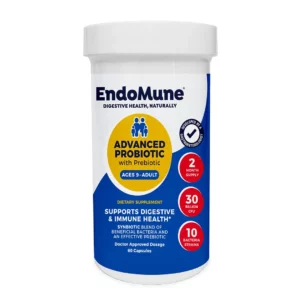
Products like EndoMune Advanced Probiotic offer these recommended probiotic strains with at least 30 billion CFUs per serving.
Nourish Your Existing Gut Bacteria
Your current gut bacteria need proper nutrition to thrive. Fiber-rich foods like beans, vegetables, and whole grains are “prebiotic” fuel for beneficial microorganisms.
Garlic, onions, bananas, and asparagus are particularly rich in prebiotic compounds. Meanwhile, limit your intake of processed foods and excess sugar, which can disrupt the healthy bacterial balance. Don’t forget to stay well-hydrated, as proper fluid intake supports optimal digestive function and bacterial metabolism.
The Realistic Outlook on Probiotics and Heart Health
Probiotics represent one facet of a comprehensive heart health strategy, not a standalone solution. While research shows promise, these benefits work best when combined with regular exercise, stress management, adequate sleep, and a balanced diet rich in fruits, vegetables, and whole grains.
Probiotics shouldn’t replace prescribed medications or other proven interventions for existing heart conditions. The gut-heart connection opens exciting possibilities for natural cardiovascular support, but it works best as part of an integrated approach to wellness.
Important Reminder: Discuss any new supplements with your healthcare provider, especially if you take medications or have existing cardiovascular conditions.
Citations:
- https://www.medicalnewstoday.com/articles/2-probiotics-help-reduce-high-blood-pressure
- https://asm.org/press-releases/2023/october/two-probiotics-identified-as-promising-hypertensio
- https://www.texasheart.org/thi-cardiologist-contributes-expertise-on-probiotics-and-blood-pressure-to-healthline/
- https://www.ahajournals.org/doi/10.1161/CIRCULATIONAHA.123.067547
- https://pmc.ncbi.nlm.nih.gov/articles/PMC5390330/
- https://pmc.ncbi.nlm.nih.gov/articles/PMC10219307/
- https://www.sciencedirect.com/science/article/pii/S2161831324000991
- https://pmc.ncbi.nlm.nih.gov/articles/PMC12010510/
- https://www.heart.org/en/news/2018/07/17/eating-probiotics-regularly-may-improve-your-blood-pressure
- https://www.ahajournals.org/doi/10.1161/hypertensionaha.114.03469
- https://academic.oup.com/proteincell/article/9/5/416/6760125
- https://clinicaltrials.gov/study/NCT06872320
- https://onlinelibrary.wiley.com/doi/10.1002/fsn3.4142
- https://www.ahajournals.org/doi/10.1161/CIRCRESAHA.125.325516
- https://clinicaltrials.gov/study/NCT06872320?term=AREA%5BInterventionSearch%5D%28Lactobacillus+rhamnosus%29&rank=4
- https://pubmed.ncbi.nlm.nih.gov/38260154/
- https://journals.asm.org/doi/abs/10.1128/cmr.00240-24?af=R
- https://www.mdpi.com/2072-6643/17/1/52
- https://www.frontiersin.org/journals/microbiology/articles/10.3389/fmicb.2024.1487641/full
- https://www.hopkinsmedicine.org/health/wellness-and-prevention/the-power-of-gut-bacteria-and-probiotics-for-heart-health