
Free shipping on all orders over $125*

Synbiotic Blend of 10 Beneficial Strains, Developed by Board-Certified Gastroenterologist

Probiotics

Probiotics, according to a large number of  studies indicate that probiotics help restore and maintain healthy guts leading to overall better health.

woman with migraine laying in bed

Probiotics: A Safe Way to Treat Migraines

It’s very difficult to describe the debilitating, forceful pain migraine headaches exert on patients in vivid detail. Not only can migraine symptoms be frighteningly severe and wide-ranging, at their worst, they can last for more than three days!

One out of four households includes someone who experiences migraines, and 90 percent of those sufferers have a family history of problems with them too.

About three years ago, we explored the growing connection between the gut microbiome and migraines and how probiotics may serve as a way to treat them very soon.

That time may be much closer than we expected…

Multi-strain probiotics to the rescue

Some 80 patients out of 100 who were experiencing either episodic or chronic migraines completed a trial that evaluated the benefits of taking two daily doses of a multi-strain probiotic or a placebo for 8-10 weeks.

Patients in both migraine groups who took probiotics reported reductions in attacks by at least 40 percent and in intensity by at least 29 percent, exceptionally good results by any measure, compared to taking a placebo.

(Nine of the strains used in this trial are a part of EndoMune Advanced Probiotic’s effective and powerful mix of beneficial bacteria providing 30 billion CFUs in every serving.)

Given the duration and severity of pain people experience due to migraines, these results are certainly great news!

The hows and whys

Although the hows and whys probiotics make a difference in migraine treatments haven’t been nailed down, some health experts believe the gut-brain axis — the connection that links your intestines, emotions and brain — may be the reason.

A recent review of studies also cited other possible gut-based problems that could contribute to migraines, including some very familiar ones like irritable bowel syndrome (IBS) and leaky gut.

The other piece of the puzzle may come down to the multi-species advantage that probiotics like EndoMune address.

Multi-species probiotics are formulated to protect and strengthen the diversity of your gut as well as treat a wider range of health challenges, including sleep, mental health and hypertension.

Resources

Probiotics: A Safe Way to Treat Migraines Read More »

EndoMune capsules displayed on blue background

Help Ease Your Anxiety with Probiotics

As our country watches the COVID-19 pandemic with apprehension, it’s no surprise that mental health specialists report a sharp increase in the number of anxiety and depression cases. A recent poll taken by the American Psychiatric Association indicates 36% ofAmericans said COVID-19 has made a serious impact on their mental health. If the physical isolation isn’t enough, the pandemic has escalated fears over potential job losses, bankruptcy, acute illness, and death.

Probiotic consumption has been a hot topic for research concerning the gut-brain axis in the past few years. The gut-brain axis (GBA) is the connection between the central nervous system (CNS) and the enteric nervous system (ENS.) That connection links the emotional and cognitive centers of the brain with our body’s intestinal functions. Recent research describes the important role gut microbiota play in these functions.

Probiotics protect against stress

That evidence suggests that probiotics can protect the body against the harmful physical and mental effects of stress. Conversely, it also suggests that probiotics can help regulate mood by keeping the gut microbiome balanced and performing optimally. That means if we want better mood and mental health, we need to take care of our guts.

However, gut bacteria can also be altered by stress, leading to suboptimal gut health. Moreover, other things can reduce the efficiency of our gut function such as antibiotics, intestinal infections, and poor diet – all of which can kill off beneficial or “good” bacteria. A lack of good bacteria in the gut has also been associated with other health problems such as leaky gut, irritable bowel syndrome, and Alzheimer’s disease.

Clearly, this evidence indicates we can’t achieve optimum health unless our guts are maintained at peak efficiency and fortifying our microbiota with probiotics may be a way to both fight and prevent anxiety and mood disorders.

How it works

The bacteria in our gut enhance our resilience to stressful situations by helping seal the gut barrier. When our microbiome is not balanced, its compromised, inefficient gut function can have a negative impact on our overall health (including mental health), due to leakage of hormones and intestinal inflammation.

If the gut lining stays porous for too long, it can allow toxins and toxic bacteria into our body, where some of those toxins can pass through the blood-brain barriers that protect the brain from these types of pathogens.

That’s how a balanced gut microbiome strengthens the gut lining, protects us against leaky gut, and reduces gut inflammation, which in turn plays a role in our mental well-being.

Inflammation also affects the central nervous system and can cause symptoms of depression; but conversely, depression can cause inflammation itself. That’s why having a robust, diverse microbiome is necessary to help control inflammation by strengthening the gut lining, and preventing unwanted toxins from entering the body.

Researchers report that people who suffer from anxiety often have symptoms of gastrointestinal (GI) disorders such as IBS, gas, and diarrhea. These ‘co-occurring disorders’ help cement the conclusions over the importance of the gut-brain axis and its role in many common illnesses.

The link between the gut-brain axis plays a critical role in how healthy we are, and an ever-increasing body of evidence strongly suggests that the microbiota in your gut influences every other aspect of your overall health – including our mental health. Simply put, it seems that now, more than ever, it’s impossible to maintain a healthy lifestyle unless our guts are happy and thriving, and everyone’s first step to better health should be to repair our guts. Consequently, dietary changes and probiotics are some of the methods researchers use to alter the microbiota in patients to help treat anxiety and depression.

Since microbiota has such an important impact on your entire body, it’s not surprising that taking probiotics for your mood doesn’t just benefit our mental health in one way. Probiotics may also help other precursors associated with an increased risk of anxiety:

  1. Helps reduce inflammation, and research suggests that depression may be an inflammatory disease
  2. Increases tryptophan, the happiness hormone, which stimulates natural serotonin production.
  3. Certain probiotic strains, like L. Rhamnosus, help reduce levels of the stress hormone corticosterone.
  4. Some strains of probiotics may possess inherent anti-depressant qualities.

Research on probiotics and the brain-gut connection continues, but the importance of this connection seems clear. Incorporating more probiotic foods in your diet, is a great step to achieving robust overall health. Unfortunately, our fast-paced lifestyles and the ever-present temptations of industrialized food make eating well-balanced, healthy meals hard. The easy answer to that is to help our guts with a probiotic supplement like an EndoMune Probiotic.  Try one today – your body and your mental health will thank you.

Help Ease Your Anxiety with Probiotics Read More »

EndoMune is 13 Years Strong!

Happy 13th Birthday… To Us!

In the midst of the many distractions the world has thrown at us so far in 2020, it’s hard to believe that EndoMune’s birthday has come around once again!

The world has changed a lot since I started EndoMune in 2007…

When I was a full-time gastroenterologist, I was concerned with helping my patients relieve symptoms related to issues like irritable bowel syndrome (IBS), constipation, traveler’s diarrhea, colic and gas — not to mention boosting immune health — that I felt an urgency to create EndoMune.

All of the reasons to protect your gut health with probiotics still exist today. In fact, there are many more of them to think about…

As the list of problems keep growing, EndoMune’s mission remains constant: Protecting your body’s immune health.

Frankly, that mission has never been more important in my lifetime than it is right now, as we’re facing a global health crisis with the coronavirus pandemic, the likes of which none of us have ever seen.

We’ve taken the steps to ensure that every member of your family has all the support we can provide, from EndoMune Jr. Advanced Probiotic Powder for your baby to EndoMune Jr. Advanced Chewable for your growing child to EndoMune Advanced Probiotic for the grownup gut.

Along the way, we developed EndoMune Metabolic Rescue, a probiotic formulated with your gut and waistline in mind to slow down your appetite, increase fullness and help you lose weight.

You’ve depended on us for your immunity needs for the last 13 years, and we’ve worked hard to earn your trust.

We’re not going anywhere. In fact, we’re just getting started…

To you and yours in good gut health!

Dr. Lawrence Hoberman

Happy 13th Birthday… To Us! Read More »

pregnant woman holding belly

Could Beneficial Bacteria Protect Babies from Autism?

The cluster of developmental disorders linked to autism spectrum disorder (ASD) is one of the greatest challenges many American families will face.

Autism presents itself uniquely in each child depending on the range and intensity of his/her symptoms, typically with communication and social skills.

One out of 54 children (18.5 out of every 1,000) experience ASD to some degree, according to recent statistics reported by the CDC just from 2016, and the numbers keep climbing.

Over the years, evidence has shown connections between gut health and ASD that are hard to ignore. Often, studies show ASD children possess a distinctly different mix of gut bacteria than those who aren’t living on the spectrum.

Although consistent treatments remain elusive, future moms may be able to reduce some ASD risk factors for their newborns with some gut-friendly help.

Moms: Don’t stress out!

Stress can be a real problem, not only for new moms but their babies (both before and after they’re born). Stress may lead to serious problems, including miscarriages, preemie births and developmental delays.

In previous research, University of Colorado scientists observed how female rats that were stressed and given the drug terbutaline (prescribed by doctors in some cases to delay premature birth) later gave birth to pups presenting autism-like symptoms.

For this new study appearing in Brain, Behavior and Immunity, Colorado scientists conducted essentially the same experiment with one major difference: another group of mice was inoculated with a species of beneficial bacteria known for its lasting anti-inflammatory effects on the brain (M. vaccae).

Female mice injected with beneficial bacteria had pups that didn’t experience autism symptoms compared to those that didn’t receive it.

No autism vaccine!

Researchers were quick to throw cold water on any assumptions they were creating a “vaccine” for autism, or that microbial interventions could relieve ASD symptoms in children (although there’s documented evidence that some have benefitted from it).

However, a day may come in the not-too-distant-future when stressed-out moms who are at a higher risk of having a child with challenges like ASD could be given a probiotic or be inoculated to support healthy brain development, says Dr. Christopher Lowry, co-author of the Colorado study.

Based on the positive results of studies like this one, researchers recommend that new moms consider gentle approaches to preventing potential problems with ASD with an emphasis on bacteria.

Some of these interventions for new moms include lowering their stress levels with a walk in nature surrounded by microbes (remember the hygiene hypothesis?), eating fermented foods and taking a probiotic.

For a new mom wanting to give her body a gut-friendly boost, EndoMune Advanced Probiotic provides a plethora of benefits from the Lactobacillus and Bifidobacterium families, plus a proven prebiotic (FOS) that feeds the beneficial bacteria in her gut.

Resources

Could Beneficial Bacteria Protect Babies from Autism? Read More »

Illustration of orange pill bottle on dark blue background

Should You Really Be Taking an Antibiotic?

The last time you visited your doctor, you may have received a prescription of an antibiotic. Did you take the initiative to ask the physician if you really needed that antibiotic you were prescribed?

Often, antibiotics serve as effective tools that solve a multitude of health problems, but only when they’re really necessary. Patients rely too often on antibiotics even for minor problems, like viruses or bacterial infections that don’t even respond these kinds of drugs.

Maybe, you pressured your doctor to prescribe a round of antibiotics just so you could get well and get back to work…

Consider this scary report about the rampant over-prescribing of antibiotics as your latest wake-up call to really consider whether you really need them or not.

No reason to prescribe antibiotics

A team of Oregon-based scientists examined how often patients received prescriptions for antibiotics out of nearly a billion of outpatient visits nationwide.

They examined samples of data culled from the 2015 National Ambulatory Medical Care Survey, looking for indications whether antibiotic prescriptions were necessary, inappropriate or issued for no documented reason.

Antibiotics were prescribed in about 13 percent of those visits (some 130 million times). A majority of them (57 percent) were judged to be medically appropriate and necessary.

But that’s only part of the story…

The remainder of antibiotics were inappropriately prescribed (25 percent) or issued for no documented reason (18 percent). In other words, many of the 56 million prescriptions for antibiotics in those other categories were probably unnecessary.

Many of those wasted prescriptions were for urinary anti-infective agents, drugs used to treat urinary tract infections (UTIs). What’s more, patients who spent more time with their physicians or suffered from chronic health issues were prescribed antibiotics for no reason.

Probiotics to the rescue

All of these unnecessary prescriptions come with a huge price: Creating an antibiotic-resistant world where these valuable drugs lose their ability to work properly.

The end results are superbug infections stemming from Clostridium difficile (C. diff.) that can be impossible to treat.

The most important takeaway is pretty simple: If you need to take an antibiotic for any reason, be aware these drugs can create imbalances in your gut that harm your immune system and slow down your ability to get well.

Your best weapon to protect your health and help your body do the hard work of healing with a little damage as possible is a probiotic, ideally with multiple strains of beneficial bacteria like EndoMune Advanced Probiotic.

EndoMune’s powerful formula of 10 beneficial strains of bacteria from the Bifidobacterium and Lactobacillusfamilies and a prebiotic (that feeds the good bugs in your gut) not only protects and enhances your immune health.

(If you’re suffering from a urinary tract infection, probiotics like EndoMune are a safe and proven way to treat them.)

It helps that very necessary antibiotic you need to do its job to help you get well when you really need it.

Resources

Should You Really Be Taking an Antibiotic? Read More »

Man in white t-shirt flexing his arm.

How Probiotics Support Your Immune System

During the unprecedented Coronavirus pandemic, we’ve seen a renewed focus from our customers on ways to “support your immune system.” The obvious question is: can probiotics, by helping your gut be as healthy as possible, also support your immune system? Although probiotics are proven to help digestion and optimal gut health, recent studies indicate probiotics also protect and enhance your immune system.

The primary reason probiotics, by strengthening your gut health, help your immune system function better is simple. Your gut and immune system have a symbiotic relationship. For example, 70-80% of your immune cells are located in your gut. The health of your gut directly impacts the overall health of your entire immune system.

Healthy guts make healthy immune systems. Conversely, compromised, unhealthy guts erode the effectiveness of immune system function. That leads to potentially more illnesses like common colds, flu, and many other infections – potentially even COVID-19.

Scientists have known for years that our microbiome helps keep overactive immune responses (leading to conditions like IBS and other autoimmune diseases) in check. However, they were still unsure of the exact mechanisms that drive this interaction.

Vitamin A

Emerging research may have found one of the potential answers. Vitamin A seems to help the healthy bacteria in our guts produce beneficial chemicals and activate naturally occurring vitamin A found in the food we eat that helps regulate our immune system naturally. After all, our goal as medical professionals is to help your body defend itself from disease naturally without medications, and the frontline of your body’s war against threats from bacteria and viral diseases is in your gut.

A study led by Shipra Vaishnava, Assistant Professor of Molecular Microbiology and Immunology at Brown University, found that when your gut has an adequate level of vitamin A, your gut seems to be able to suppress overactive immune responses. That suggests that instead of your body’s defense system attacking helpful bacteria in your gut and upsetting the natural balance of these necessary flora, they can coexist with each other peacefully; hopefully, leading to a combination of optimal gut and immune system health function.

“A lot of these diseases are attributed to increased immune response or immune activation, but we’ve found a new way that bacteria in our gut can dampen the immune response,” Shipra Vaishnava argues. “This research could be critical in determining therapies in the case of autoimmune diseases such as Crohn’s disease or other inflammatory bowel diseases, as well as vitamin A deficiency.”

Simply put, probiotic supplements give your body the ability to absorb nutrients more efficiently, resulting in an improved immune system. That’s why better gut health prepares your body to defend itself against external threats – even during a pandemic.

Diversifying your Gut to Strengthen your Immune System

Since a COVID-19 vaccine may not be available until sometime next year, anyone looking for ways to build up your body’s defenses naturally should make sure your body has a diverse microbiome which leads to a healthy gut. A health gut, in turn, leads to a more robust, healthier immune system

The best way to increase microbiome diversity is to eat foods that support a healthy gut, and avoiding alcohol and highly processed foods. We get it, that’s always hard to do, and is challenging during a pandemic like COVID-19. One easy way to help your gut stay healthy and strong is to take a multistrain probiotic like EndoMune Advanced Probiotics.

However, don’t forget to help your body stay strong by managing your mental health, getting enough sleep, and staying physically active if you can do so safely.

It’s small, daily steps like these that make a big difference in protecting your health.

For more information on how to combat the Coronavirus, read our previous blog:

C oronavirus: Protect Your Immune System

How Probiotics Support Your Immune System Read More »

EndoMune Advanced Adult Probiotic passed the test! Image of bottles.

We Passed the Test!

Hi Everyone!

As part of our quality control best practices, we frequently test EndoMune Advanced Probiotic to ensure our quality and label matches exactly what’s in each capsule.

Well, we got our latest test results and we’re very proud to share that they’re fantastic!

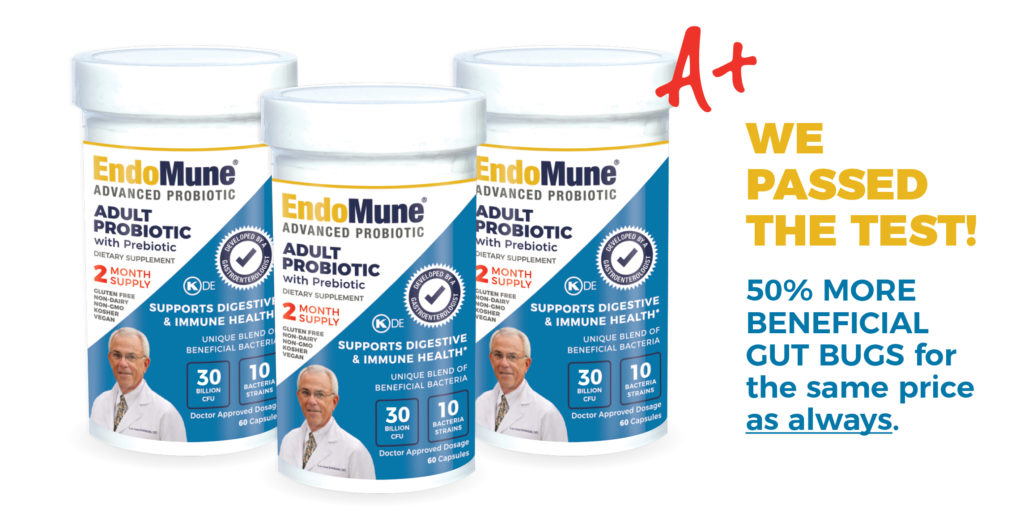
We’ve just learned each capsule of EndoMune Advanced Probiotic contains 50 percent more of the beneficial bacteria you’ve come to rely on for more than a decade!

That awesome news came to us despite absolutely no changes in our proven formula or our ongoing testing schedules.

Along with the prebiotic FOS that feed the bugs in your gut, each capsule of EndoMune contains 30 billion CFUs of beneficial bacteria from the Lactobacillus and Bifidobacterium families up to the expiration date found on the bottom of each bottle.

If you’re thinking that we’re sharing this awesome news just as an excuse to increase our prices, forget it!

EndoMune Advanced Probiotic offers 50 percent more of the beneficial gut bugs at the same price as always!

To you and yours in good gut health!

Dr. Lawrence Hoberman

P.S. For each bottle of EndoMune you purchase, we will donate $2 to the Feeding America COVID-19 Response Fund that helps stock food banks that support our communities being affected all across America by this pandemic!

We Passed the Test! Read More »

Pregnant woman looking out a window while holding her belly.

Coronavirus and Pregnancy

Coronavirus Adds New Anxieties for Pregnant Women 

Recently, the World Health Organization labeled coronavirus disease 2019 (COVID-19) a pandemic. Many pregnant women have expressed concerns about the impact of COVID-19 on their health and the health of their unborn babies. Not much is known about pregnancy and the new Coronavirus as more research is being done.

As you might already know, the virus spreads through respiratory droplets sent into the air when a person who is infected coughs or sneezes. It might also spread when someone touches a surface infected by a person who has the virus.

Health officials are urging pregnant women, along with the elderly and others with weakened immune systems, to do their best to avoid exposure to the Coronavirus. Doctors suggest staying home as much as possible, avoiding crowds — including long lines at the supermarkets and other stores — and staying away from emergency rooms if possible.

New information is being discovered daily, but today we answered some of the most common questions surrounding pregnancy and COVID-19.

What can pregnant women do to protect themselves against the novel Coronavirus? 

While there is further research underway across the world, it is currently not known if pregnant women have a greater chance of getting sick from COVID-19 than the general public or if they are more likely to have a serious illness as a result of it.

Women experience physiological changes during pregnancy that can weaken their immune systems and place them at higher risk for severe complications if exposed to viruses, especially if they have underlying health conditions. With viruses from the same family as COVID-19, and other viral respiratory infections, such as influenza, women have had a higher risk of developing severe illness in the past.

With little knowledge of how COVID-19 affects pregnant women and their unborn children, it is pertinent they protect themselves from illnesses and use all the precautions to reduce the chances of contracting COVID-19.

Pregnant women should do the same things as the general public to void infection. You can help stop the spread of COVID-19 by taking these actions:

  • Cover your coughs and sneezes – using a tissue is best, but your elbow is a good alternative
  • Avoid touching your eyes, mouth, and nose
  • Wash your hands often using soap and water for at least 20 seconds
  • Use an alcohol-based hand sanitizer
  • Thoroughly wash your fruits and vegetables from the store
  • Avoid public spaces (social distancing is important to limit the spread of the virus)
  • Avoid people who are sick – even in your own home
  • Hydrate and rest often
  • Take a high-quality probiotic to promote healthy digestion and immune health
  • Maintain a healthy diet, high in antioxidant-rich foods

Can COVID-19 be passed from a pregnant woman to the fetus or newborn? 

It is not currently known if a pregnant woman with COVID-19 can pass the virus to her fetus or baby during pregnancy or delivery. No infants born to mothers with COVID-19 have tested positive for the COVID-19 virus.

In a recent study published in ​The Lancet​, researchers followed nine pregnant women who had tested positive for the Coronavirus in Wuhan, China— the epicenter of the outbreak— during their third trimester. “Researchers found that none of the infants, all delivered cesarean, had the virus at birth. The virus was not found in samples of the mothers’ breast milk, cord blood, babies throats or amniotic fluid.”

“The risk of passing the infection to the fetus appears to be low, and there is no evidence of any fetal malformations or effects due to maternal infection with COVID-19,” according to the study.

Can you breastfeed if you tested positive for COVID-19? 

While there is no ​evidence​ of the virus in breastmilk, the Centers for Disease Control and Prevention said it’s still not clear whether the virus can be transmitted to infants during feedings.

“Given that the virus is spread through respiratory droplets, mothers should wash their hands before feeding their babies, consider wearing a face mask to minimize the infant’s exposure and properly clean their breast pumps.”

Stay Positive and Take Your Probiotics

It’s important to keep it all in perspective! Create a new daily routine at home to help maintain a sense of normalcy until the baby arrives and take your daily probiotics to help build the best defense.

Resources

US National Library of Medicine

Centers for Disease Control and Prevention

The Lancet

The Royal College of Obstetricians and Gynecologist


Coronavirus and Pregnancy Read More »

Photo of pregnant woman and text "probiotics and pregnancy"

Why You Should Consider Taking A Probiotic While Pregnant

There are many things you have to consider and prepare for when pregnant, and your gut should be one of them. A strong and healthy gut is vital for both mom and baby. If you have a poor diet, drink soda, take antibiotics, or have high-stress levels while pregnant, it can take a toll on your gut and your baby’s immunity. If you are taking a probiotic while pregnant, it could be essential to the health of you and your baby.

Probiotics have several health benefits for pregnant and nursing women. Studies have shown that what a woman consumes during pregnancy can have numerous effects on her and her baby, ranging from gestational diabetes and hypertension to asthma and depression.

Keep reading to learn about the benefits of taking probiotics during pregnancy.

Improved digestion

One of the most common conditions that can cause discomfort for pregnant women is constipation. It’s often the result of hormones that cause the smooth muscle in the GI tract to relax. Dietary manipulation that includes increasing fiber and fluids can help reduce constipation. Probiotics with a prebiotic (symbiotics) can be an excellent additional nutrition therapy, too.

Because probiotics help with digestion, healthcare professionals believe that they can be beneficial for pregnant women who could be more prone to constipation or diarrhea.

Better nutrient absorption 

A healthy gut also ensures that nutrients are absorbed efficiently. If the mother gets more nourishment, the baby will, too.

In 2016, a study evaluated the effect of high-dose probiotics in women during late pregnancy and their breast milk composition and if differences in breast milk can affect stool samples in newborns.

It was a double-blind, placebo-controlled, randomized trial where 66 women took either the probiotic or a placebo daily. There were decreased incidences of infantile colic and regurgitation and improved gastrointestinal function in the infants whose mother received the probiotics.

Reduce the risk of Infant atopic eczema and food allergies

Eczema, recognized by red, itchy patches of skin, is a precursor to a variety of other conditions such as food allergies and asthma, so reducing or preventing it is very important.

We know that differences in a baby’s microbiome link to increased allergy risks, and research is supporting the use of probiotics to prevent eczema.

A large Meta-analysis reported that pregnant women given probiotics during as well as the initial postpartum period reduced eczema by 22%.

Protect against Gestational Diabetes Mellitus (GDM)

High blood sugar is never good, and it’s especially harmful during pregnancy. When glucose intolerance appears for the first time in pregnancy, it is called gestational diabetes mellitus.

During pregnancy, an imbalance in gut flora resembles metabolic dysfunction with increased inflammation and decreased insulin sensitivity.

A 2019 Meta-analysis using ten studies with a combined total of 1,139 participants, found that probiotics supplementation was effective at reducing GDM; it reduced the fasting blood glucose serum insulin levels and insulin resistance. It also shows that multi-strain probiotics are more effective than single-strain probiotics.

Did you know EndoMune Probiotics is multi-strain and multi-species? With ten different strains and 20 billion bacteria, you and your baby can rest assured you're getting the beneficial bacteria you need!

Reduced risk of Preeclampsia

Preeclampsia, a pregnancy complication characterized by high blood pressure, is the number one cause of maternal death in the United States. Symptoms include high blood pressure, swelling of the hands and feet, and protein in urine. A study featured in the BMJ Open found a reduced risk of preeclampsia and preterm delivery when taking a probiotic supplement.

Healthy mom, healthy baby

We are all looking for ways to ensure pregnant moms and babies have all the possible advantages to a healthy and happy life.

The research shows probiotics may prevent pregnancy complications for mom and reduce baby’s risk of infant atopic eczema and food allergies.

While further studies continue, pregnant women should eat healthfully, exercise diligently, and consider taking a multi-species probiotic and prebiotic supplement.

Shop EndoMune Probiotics

Why You Should Consider Taking A Probiotic While Pregnant Read More »

Image of Text: "5 reasons why you need to take a probiotic!"

5 Reasons Why You Need to Take a Probiotic

If you’re seeing our blog for the first time — or the tenth time — you may be wondering why we share tips and news about the ever-changing, ever-shifting, ever-growing world of gut health many times each month in this space.

Our lives — full of work, life responsibilities and stress — leave us so little free time just to be…

Many of us fail to take even the very simple and necessary step of protecting our gut health by taking a probiotic every day.

Gut health affects so many parts of our own health and well-being, that a natural boost with a probiotic can make a world of difference to keep our bodies working just as they should.

Need some solid evidence that probiotics can make a world of difference to your health? Consider these five questions when you’re considering why you need to take a probiotic for your health, based on the latest research.

Have you taken a lot of antibiotics?

People rely so much and so often on antibiotics as a quick fix to solve all sorts of health problems — even minor ones like colds and sore throats — that doctors tend to over-prescribe them.

This excessive use has created an antibiotic-resistant world in which these drugs are quickly losing their ability to do the healing work they were meant to do.

The problems have become so acute that more people than ever are being sickened from exposure to superbug infections like Clostridium difficile (C. diff.) and some will die from them.

Antibiotics deplete the beneficial bacteria in your gut that keep your immune system strong. If you really need an antibiotic to solve a health problem, to take a probiotic two hours before taking an antibiotic to give those beneficial bacteria some extra time to reach and protect your gut.

Have you felt constipated lately?

Even a common gut-related health problem like constipation can be a sign of more serious health problems like irritable bowel syndrome (IBS) and kidney disease. Taking a probiotic restores the healthy balance of bacteria in your gut and lessens the need for harsher medications like mesalazine.

How are your emotions?

Disruptions in your gut-brain axis — the vital link that connects your gut, emotions and intestines — can add to challenges you may have with your sleep, mental health and mood. Taking a multi-species probiotic every day protects your gut’s ability to produce neurotransmitter chemicals like serotonin.

Could eating fermented foods help or hurt your gut?

Depending on how they’re prepared, fermented foods — such as pickles, yogurt, kombucha tea, pickles and miso — don’t provide the dependable gut health benefits that probiotics do and, in some cases, create more problems for your health than they’re worth.

Are you having trouble sleeping?

Shifts in your body’s circadian clock (the biological levers that control your wake-sleep schedule) due to work schedules or traveling long distances affect your gut health. Taking a quality probiotic that also contains a prebiotic (food for the good bugs in your gut) can help you get your sleep schedule back on track.

When evaluating a quality probiotic, you’ll want to consider a product that contains multiple strains of proven and beneficial bacteria and a prebiotic like EndoMune Advanced Probiotic and EndoMune Kids Advanced Probiotic.

BONUS QUESTION: How is your bone health?

If you’re having trouble maintaining your bone health, probiotics aid the production of butyrate (short-chain fatty acids created when your gut processes soluble fiber) that may increase bone mass.

European Journal of Public Health

Frontiers in Psychiatry

Journal of the American Society of Nephrology

BioMed Research International

Sleep Medicine

Microorganisms

Immunity

Mayo Clinic

5 Reasons Why You Need to Take a Probiotic Read More »

Scroll to Top